
AutoPilot's built-in Automation Consultant learns from every correction your team makes. It takes over coding and approval vendor by vendor, only once it has proven itself on your own invoices, and only inside rules you publish.
The leaders are not working harder. They process more invoices straight through, with fewer exceptions and fewer hands on each one. The rest still key, code, chase and re-check invoices that look the same as last month's.
A target, not a measured result. Touchless rate is measured per customer on its own approved invoices.
Sources: 1. Ardent Partners, Accounts Payable Metrics that Matter in 2026. 2. The Hackett Group, 2025, as reported by Corpay. 3. Ardent Partners, The State of ePayables 2025.
Peppol e-invoices arrive as structured data. Supplier PDFs are read by AI, and uncertain fields stop for a person.
Each line is coded in your ERP's own segments, learned from your history and from every correction.
Checked against POs, contracts, price lists and timesheets within your tolerance. Duplicates caught across every entity.
Routed by your delegation of authority. Approvers see the clause that sent it to them, on their phone.
Approved invoices go to your ERP for payment. AutoPilot never moves money.
A vendor moves up a rung at 98% measured accuracy over 20 decisions, by default. One reversal by your team moves it back down. Nothing is switched on globally.
Shown with its confidence and the reason why.
Filled in, accepted with one key.
Coded without a touch, undone with one.
Only inside an auto-approve rule you publish.
No one has to configure AutoPilot's rules. Its Automation Consultant watches what it suggested, what your team decided and why, and proposes the rules for you. That one record is its memory, its accuracy score and your audit trail. Your controller can see what it has learned, from which invoices, and switch any of it off.
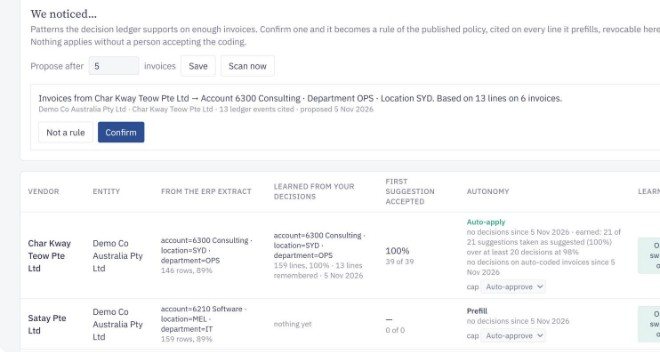
How each vendor is coded for each entity. One correction changes the next suggestion.
The Automation Consultant turns consistent decisions into a rule in plain language, proposed for your approval.
Measured accuracy per vendor and entity decides when it codes, then approves, without a touch.
AutoPilot never moves money. Your ERP and your own banking pay, exactly as today.
Who did what and when, what the AI suggested with its confidence, and the policy clause behind each routing. Nothing is edited or deleted.
The person who coded or routed an invoice can never approve it.
Learning is per customer. Supplier bank details are never sent to an AI model.
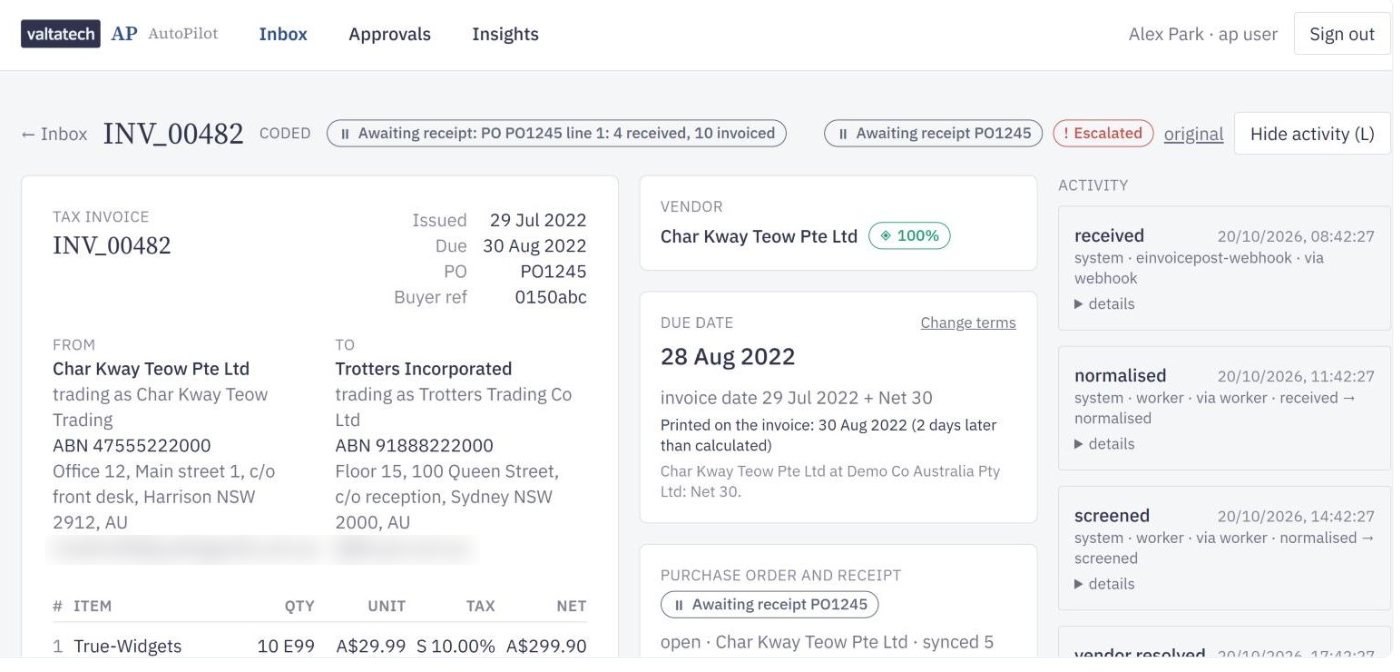
One inbox across every entity, with PayGuard status, confidence and the reason any invoice is waiting. Insights on time per invoice, bottlenecks and a cash-out schedule by due date.
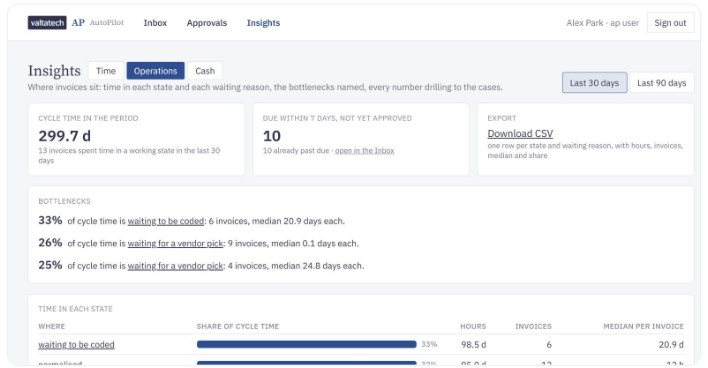
Screens show demo data. Supplier names are illustrative.
Certified Peppol Access Point. Suppliers send structured e-invoices, so fewer documents need reading at all.
Proves every supplier bank account is theirs, then screens invoices and payment files before release.
Codes, matches and routes across every entity, and learns from every decision your team makes.
Send us 12 months of AP history as an ERP export. We propose your coding and vendor set-up from it, screen your supplier payees through PayGuard, and show which vendors would earn automation first.
Book your AP automation assessment